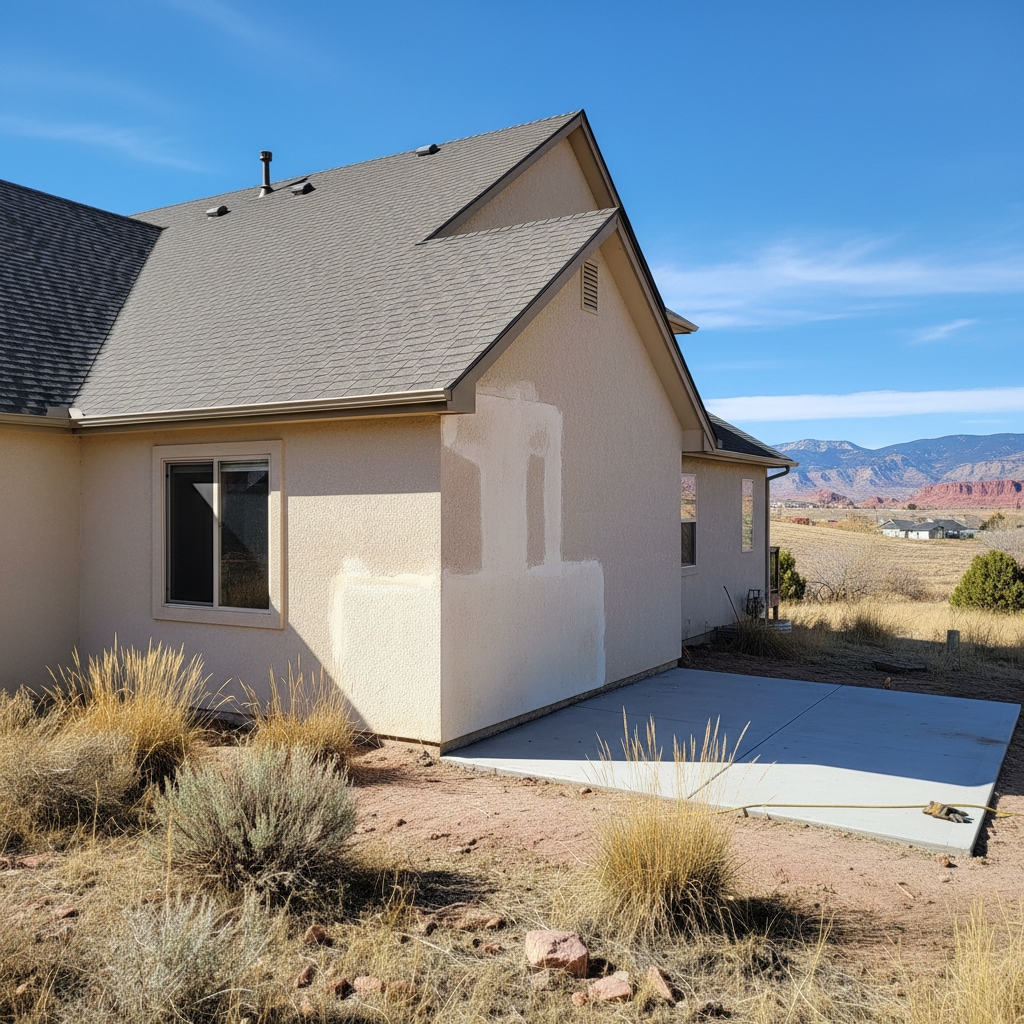
When's the best time to fix that crack in your stucco? That's a question I hear a lot, especially here in Lehi where our weather can get pretty wild. You'd think stucco is tough – and it really is – but even the toughest materials have their limits. Timing your repairs just right makes a huge difference in how long that fix actually lasts.
Why Lehi's Weather Really Matters for Stucco Repair
Our climate here in Lehi isn't exactly mild, is it? We get those scorching summers, freezing winters, and a good bit of moisture, especially with spring rains and those occasional heavy snowfalls. All that expanding and shrinking, plus the freeze-thaw cycles, puts a real strain on your home's exterior. Stucco handles it well, sure, but over time, small cracks can show up, or existing damage can just get worse.
You see this a lot in places like the Traverse Mountain development, for instance, where the ground can shift a little or homes are just blasted by direct sun and wind. Those conditions can really put a stucco system to the test. If you've got a tiny hairline crack, it might not seem like a big deal in July. But come January, when water gets in there, freezes, and expands, that little crack can become a much bigger problem, pushing the stucco right off the wall. That's why I always tell folks, don't wait.
The Best Time to Schedule Stucco Repairs
Honestly, the best time to fix stucco is the moment you notice a problem. But if you're asking about the ideal conditions for the actual work, here's what I've found works best:
- Spring (Late April to Early June): This is prime time. Temperatures are usually mild – not too hot, not too cold. We're past the worst of the winter freezes, and the summer heat hasn't kicked in yet. The stucco materials cure nicely, and you don't have to worry as much about sudden downpours messing up the job. It's also a good time to catch any damage winter might have caused.
- Fall (September to Mid-November): Another great window. The intense summer heat is gone, and we usually get a good stretch of dry, moderate weather before the serious cold sets in. This gives the repairs plenty of time to set up and cure before they face freezing temperatures and winter moisture.
What about summer and winter? We can definitely do repairs then, but there are challenges. In summer, the heat can make stucco cure too fast, which can lead to issues if we're not super careful. In winter, freezing temperatures are the enemy. We can use additives and heaters, but it's just more complicated and sometimes more expensive. It's not impossible, but it's not ideal for a truly long-lasting fix.
Weather Conditions That Affect the Work
When we're out on a job, we're always keeping a close eye on the forecast. Here's why:
- Rain: Stucco and fresh rain just don't mix. If it's raining or expected to rain, we can't apply new stucco. It washes away, weakens the mix, and can cause all sorts of problems. We need a dry surface to start and a dry period for it to cure.
- Temperature: Too hot or too cold is bad. Ideal temperatures are usually between 40°F and 90°F. Below freezing, the water in the mix can freeze before it cures, ruining the bond. Above 90°F, it can dry too quickly, leading to cracking or a weaker finish.
- Wind: High winds can dry out the stucco too fast, kind of like high temperatures, and can also blow dust and debris onto a fresh application, messing up the finish.
That's why when you call Guardian Stucco Company, we'll talk through the timing with you. We want to make sure the conditions are right for a repair that's going to hold up.
Protecting Your Stucco Investment Year-Round
Beyond timing your repairs, there are simple things you can do to protect your stucco:
- Keep an Eye Out: Regularly walk around your house. Look for hairline cracks, discoloration, or any areas where the stucco might be bulging or crumbling. Catching these early is key.
- Manage Moisture: Make sure your gutters are clean and directing water away from your foundation. Check your sprinkler heads – they shouldn't be constantly soaking your stucco. Water is stucco's biggest enemy when it gets behind the surface.
- Trim Landscaping: Keep bushes and trees trimmed away from your stucco. They can trap moisture against the wall and prevent it from drying out properly.
A little proactive care goes a long way. If you spot something, don't hesitate to give us a call. Getting ahead of the problem usually means a simpler, less expensive fix down the road.