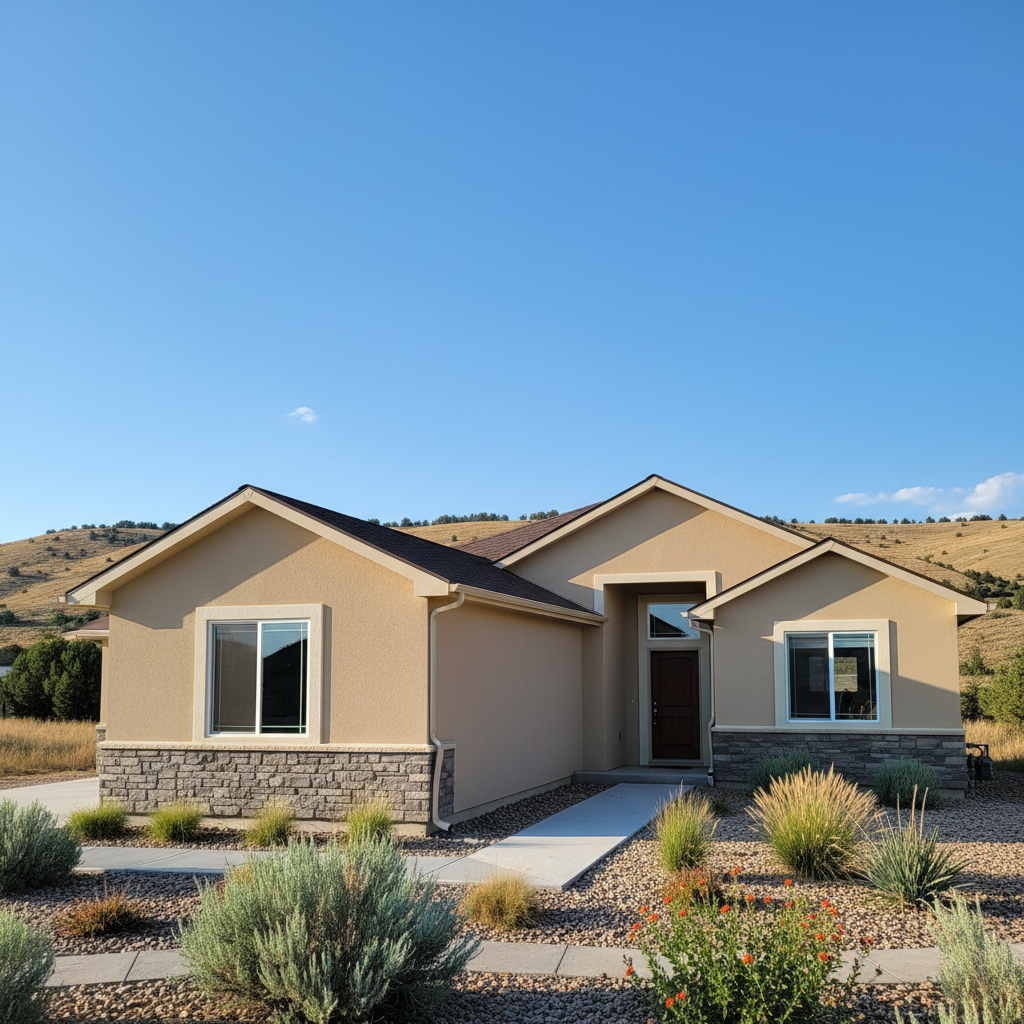
So, you're thinking about EIFS for your home right here in Lehi. Maybe you've heard it's an amazing insulator, or you just like the clean look it gives. Whatever your reason, you're probably wondering what it's actually going to cost you. I totally get it. Nobody wants a surprise bill, especially not for a big project like this one.
I've been in this business a long time, and I've seen countless EIFS jobs come and go — everything from brand-new houses in Traverse Mountain to older remodels down near Main Street. There isn't a single, fixed price tag for EIFS, but I can definitely give you a clear picture of what makes the cost go up or down, and what you should expect.
What Makes EIFS Installation Costs Change?
A few key things really shift the price of an EIFS job. It's not just about square footage, though that's a big piece of the puzzle.
- The Type of EIFS System: There are different kinds, you know? Barrier EIFS (sometimes called conventional) usually costs less than Drainage EIFS. Drainage EIFS, which includes a special drainage plane to handle moisture, is what I typically suggest for most homes here in Utah. Especially with our crazy freeze-thaw cycles. It's a bit more complicated to put in, so it costs more upfront, but it's a much smarter long-term investment for keeping moisture out.
- Square Footage & Wall Complexity: This one's pretty obvious. More wall means more material and more work. But it's not just the size; it's the shape, too. A simple, flat rectangular house is way easier (and cheaper) to do than one with lots of bump-outs, archways, gables, dormers, and intricate architectural details. Every single corner, every window, every door means more cutting, more flashing, and more careful detailing, and that just takes time.
- Insulation Thickness: EIFS uses rigid insulation boards. The thicker the insulation, the better the R-value, but naturally, the material costs more. Standard thickness is usually 1-2 inches, but you can go thicker if you're really aiming for maximum energy efficiency.
- Scaffolding & Access: If your house is two stories or taller, or if there are tricky spots to reach, we'll need scaffolding or lifts. Setting all that up and moving it around adds to the labor and equipment costs. A single-story ranch house is always going to be cheaper to get to than a multi-level home on a sloped lot, right?
- Condition of the Existing Substrate: If we're putting EIFS over old sheathing that's damaged, or if there's a lot of prep work needed to get the walls ready, that's going to add to the cost. We absolutely need a clean, stable surface to work on.
- Finish Type & Color: The final topcoat comes in all sorts of textures and colors. Some specialized textures or custom color matches can be a little pricier than the standard options.
Typical Cost Ranges in Lehi, UT
Alright, let's talk numbers. Keep in mind these are ranges, and your specific project could end up on the higher or lower side depending on all those factors I just mentioned. For a standard Drainage EIFS system, installed by a professional crew like Guardian Stucco Company, you're generally looking at:
- $10 to $18 per square foot for most residential projects.
Now, let's break that down a bit more:
- Smaller, simpler homes (1,500 - 2,000 sq ft of wall area): You might be closer to the $14-$18/sq ft range, since fixed costs get spread over less area.
- Larger, moderately complex homes (2,500 - 4,000 sq ft of wall area): These often fall into the $12-$16/sq ft range.
- Very large or highly complex custom homes: Could see prices from $15-$18+ per square foot, especially with intricate architectural details or super thick insulation.
So, for a typical 2,500 square foot home with, let's say, 1,800 square feet of exterior wall surface, you might be looking at a total cost between $21,600 and $32,400 for a quality EIFS installation.
What Should a Quote Include?
When you get a quote, don't just stare at the bottom line. A good, clear quote should spell out everything:
- Preparation: This covers cleaning, any small repairs to the substrate, and masking off windows and doors.
- Materials: Insulation boards (the type and thickness), base coat, mesh, primer, and the finish coat (texture and color). It should clearly state if it's a Barrier or Drainage system.
- Flashing & Sealants: Proper flashing around windows, doors, and any penetrations is absolutely crucial for stopping water from getting in. Don't ever cut corners here. Sealants for expansion joints and around openings are also important.
- Labor: The cost for the crew to install everything.
- Scaffolding/Equipment: If it's needed for access.
- Cleanup & Waste Removal: Getting rid of all the debris once the job is done.
- Warranty Information: Both for the materials and the actual work.
If a quote only gives you one number, push back a little. Ask for a detailed breakdown. You really need to know what you're paying for.
How to Avoid Paying Too Much for EIFS
Nobody wants to get ripped off, right? Here's how you can make sure you're getting a fair deal:
- Get Multiple Quotes: This is basic, but so important. Get at least three detailed quotes from different reputable contractors. Don't just pick the cheapest one; compare what's actually included. A super low bid can often be a red flag for cutting corners.
- Check References & Reviews: Talk to past clients. Look at their work. Make sure they're experienced with EIFS specifically, not just general stucco. EIFS is a specialized system, after all.
- Verify Licensing & Insurance: This is non-negotiable. Make sure the contractor is licensed and carries proper liability and worker's comp insurance. If they're not, you could be on the hook if something goes wrong.
- Understand the Warranty: Ask about both the material warranty from the manufacturer and the workmanship warranty from the installer. A good contractor stands behind their work.
- Ask About the System: Specifically ask if they're putting in a Drainage EIFS system. If they're pushing a Barrier system, especially on a new build or a full re-clad, ask them why. For our climate, I almost always recommend Drainage EIFS.
- Don't Rush: Take your time to review quotes and ask questions. A good contractor will be happy to explain everything.
EIFS is a fantastic exterior system when it's installed correctly. It offers great insulation and a beautiful finish that can really boost your home's curb appeal and energy efficiency. Just make sure you do your homework, understand the costs, and pick a contractor who truly knows their stuff. Here at Guardian Stucco Company, we're always happy to walk you through the process and give you a transparent quote for your Lehi home.